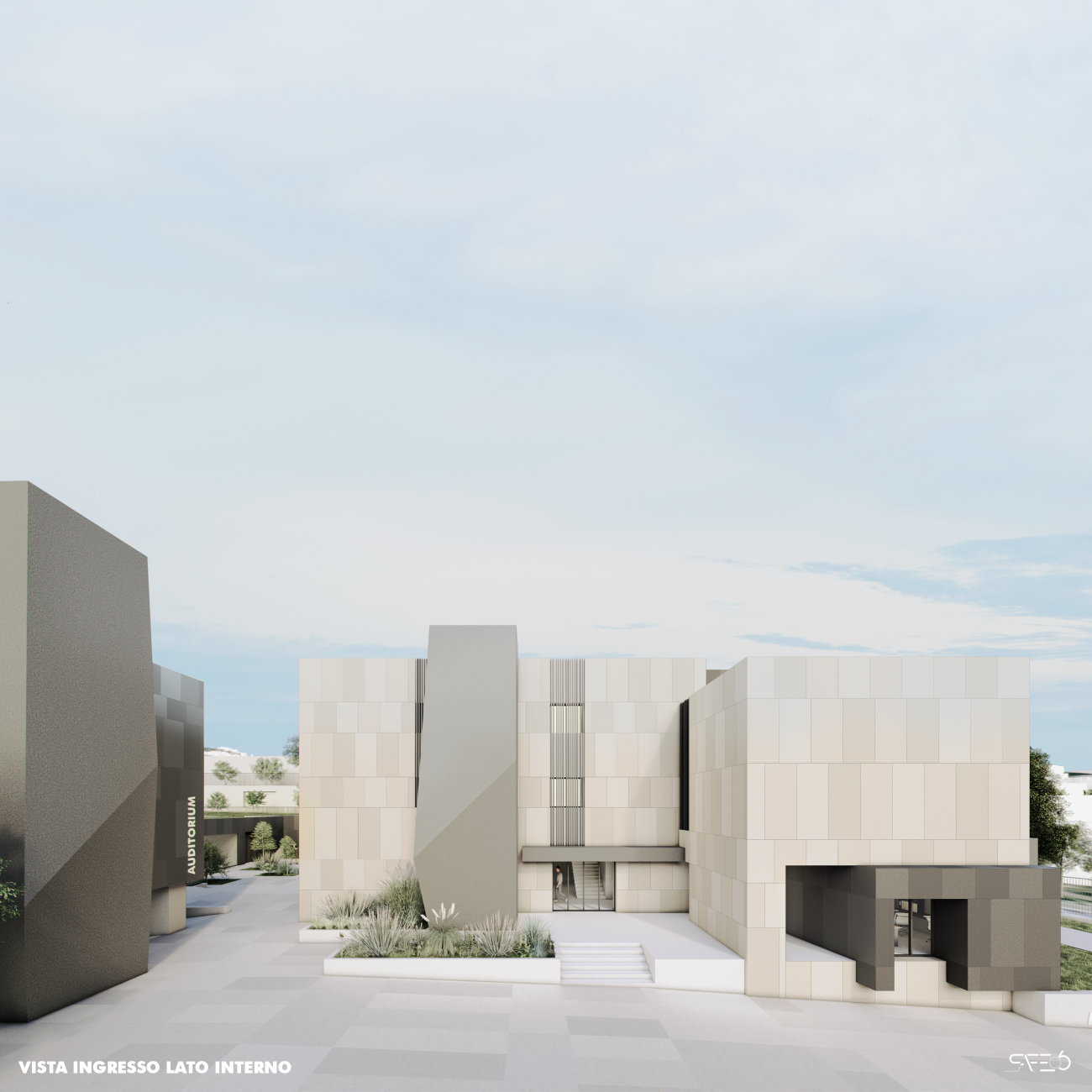
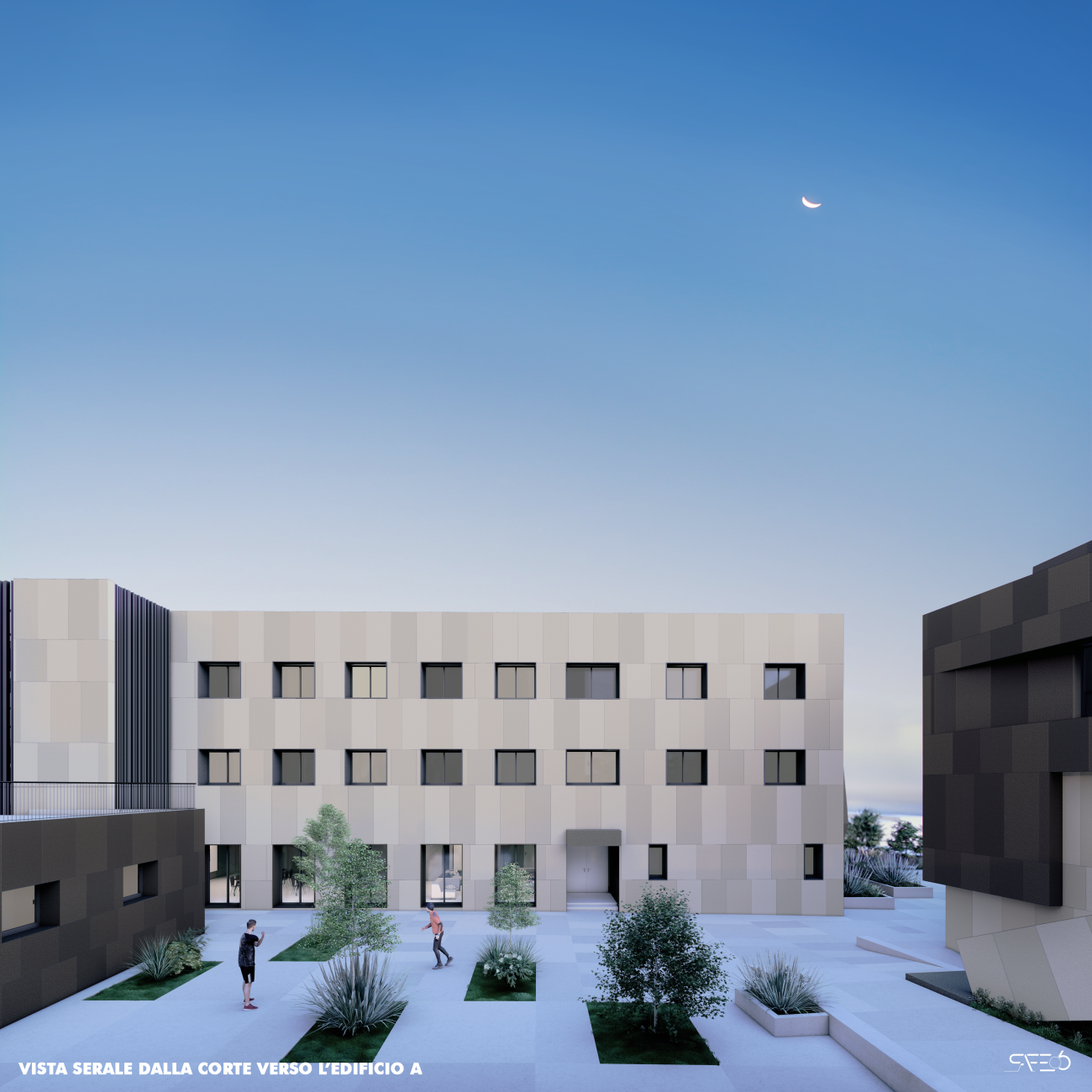
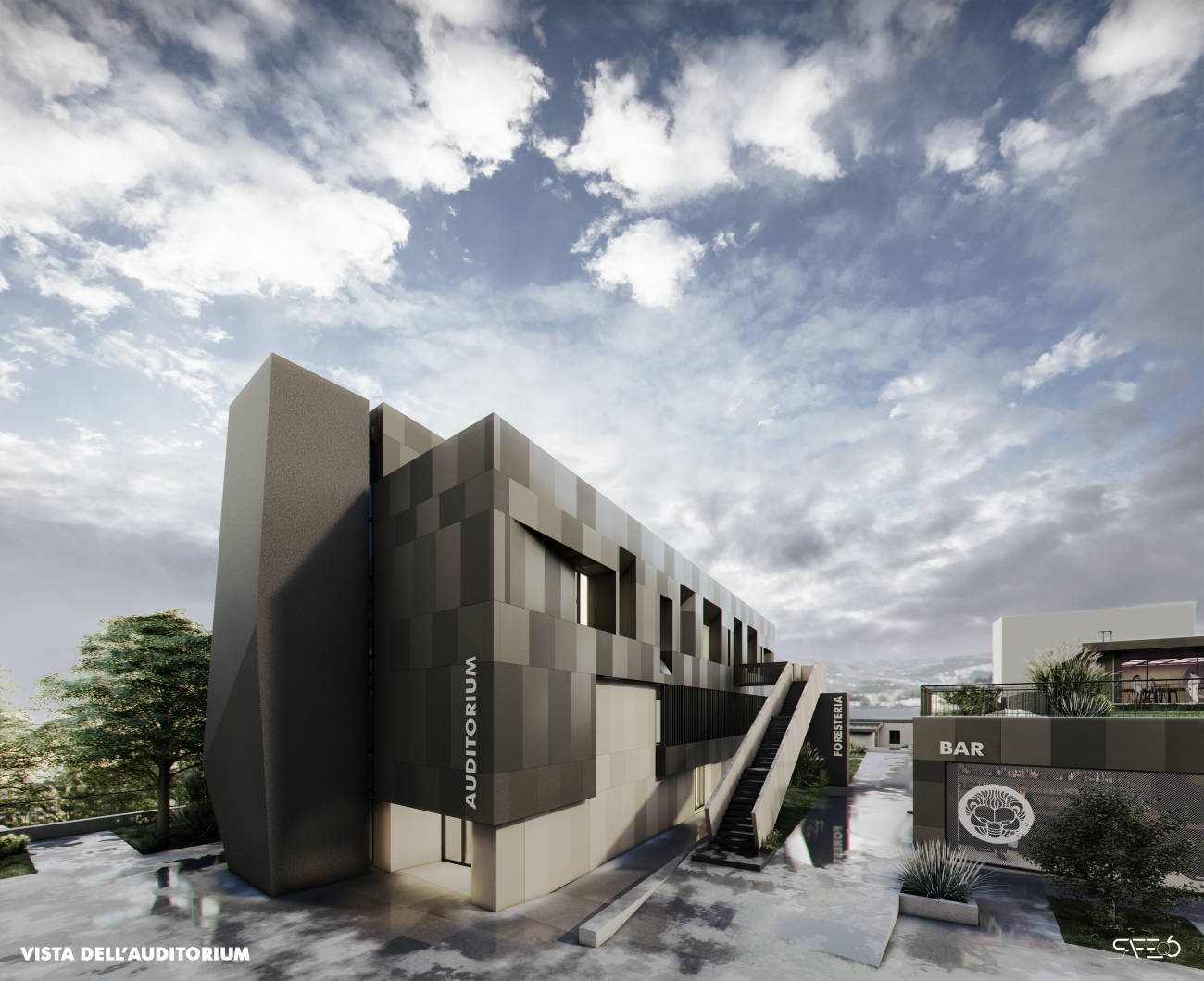
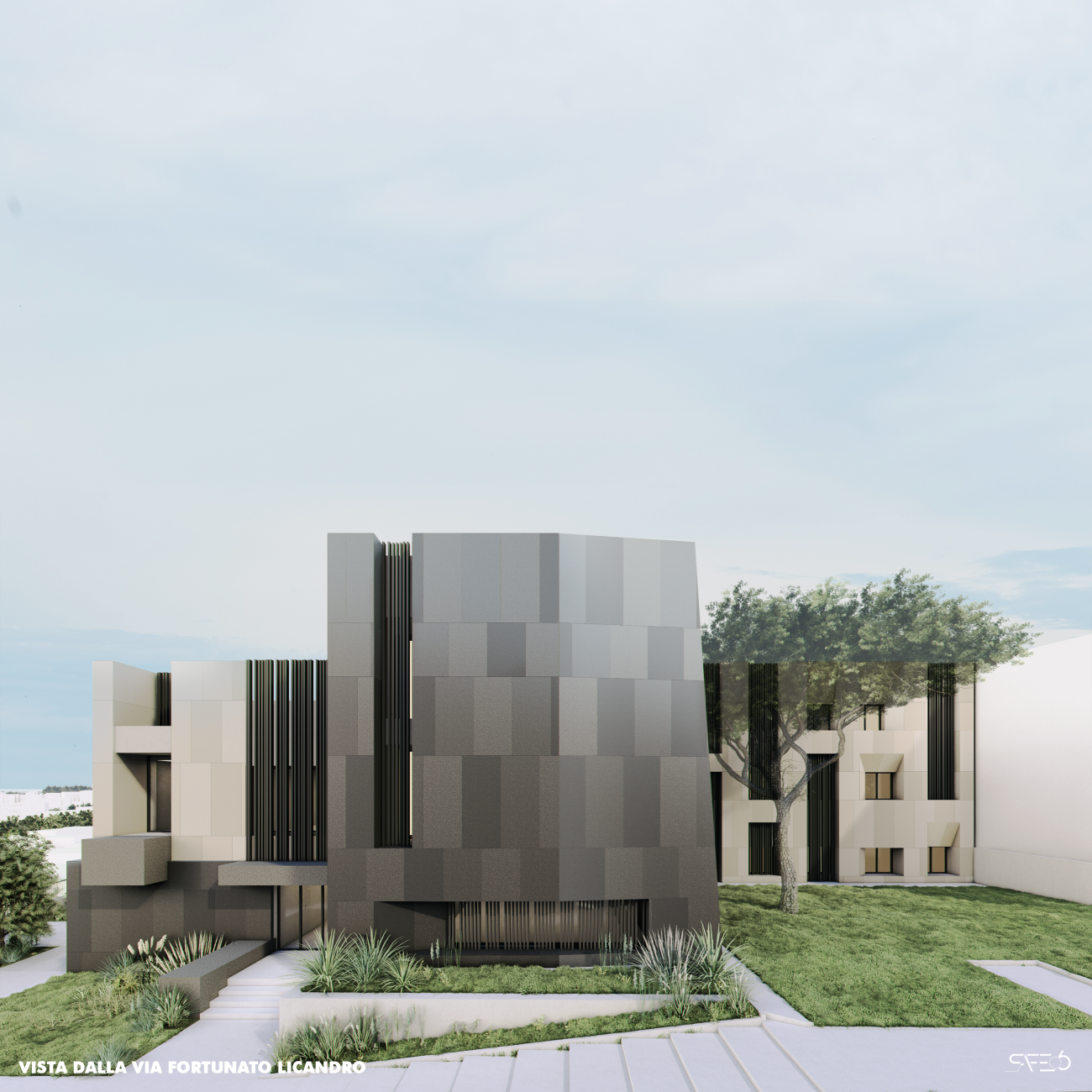
The new vision of the former Monfort Convent, which will be renovated and repurposed to welcome, educate and promote culture.
The CAMPUS project involves the renovation and repurposing of the historic Monfort Fathers' complex, which will become a university residence and a new cultural center open to the city.
The project is part of the Università Mediterranea development strategies and national and regional policies for the development of university buildings, pursuing objectives of urban regeneration, land use reduction, and environmental sustainability, consistent with contemporary planning principles and the most current strategies for the restoration of built heritage.

The project is part of a broader program to enhance abandoned buildings, which the Università Mediterranea has launched with the aim of strengthening its presence in the urban fabric and offering concrete solutions to the growing demand for student housing and services.
The restoration of the former convent represents an exemplary opportunity in this sense: to return to the city a historic building of great architectural quality, transforming it into a lively, popular place capable of fostering relationships and opportunities.
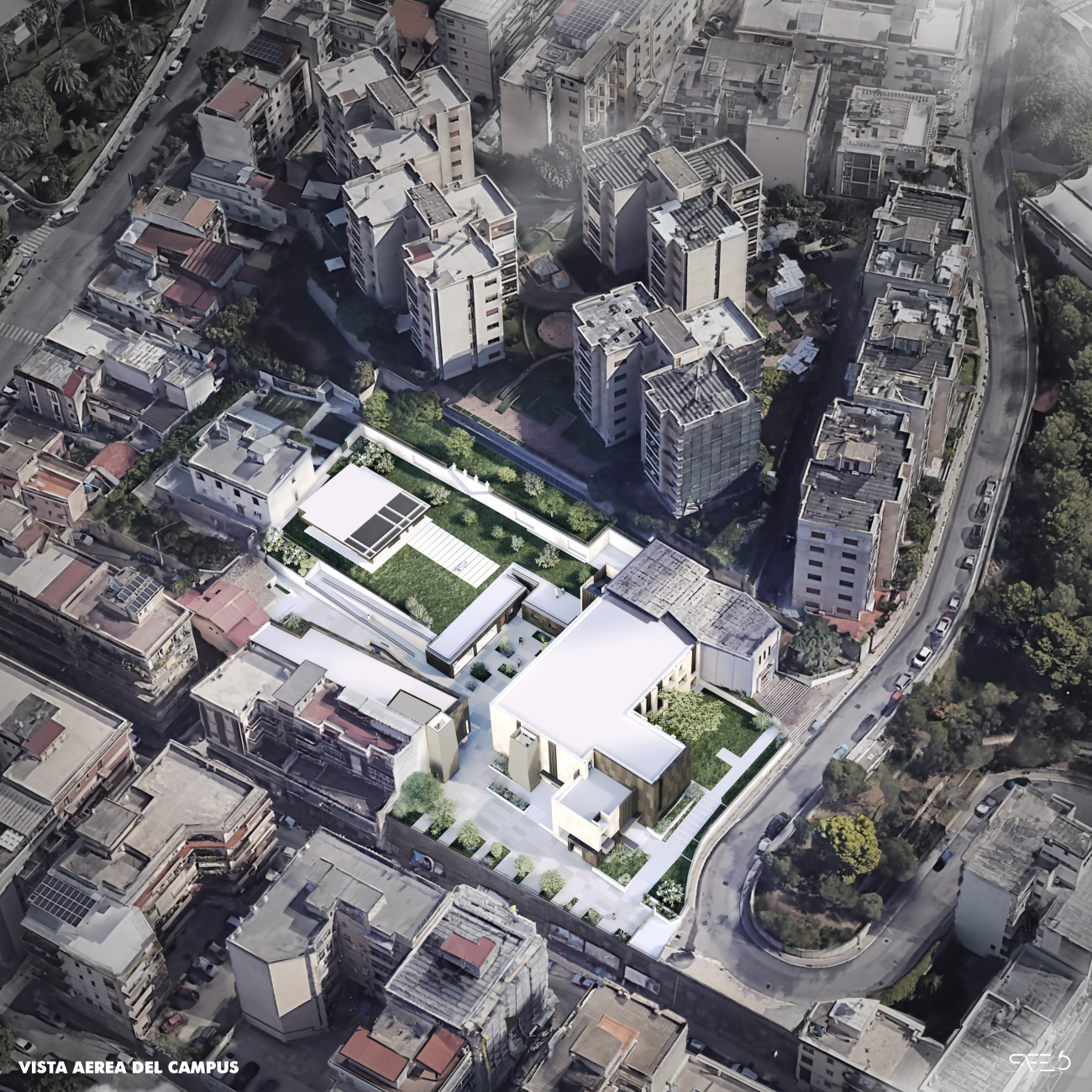
The project addresses a complex urban context, in which the decommissioning of historic buildings has left voids that are difficult to fill.
The choice to dedicate the complex to university functions responds to a logic of cultural and social protection of the area, capable of triggering regeneration processes that go far beyond the individual building.

The future university residence will offer accommodations and services for out-of-town students, visiting students, and visiting professors, helping strengthen the university's international appeal and the city's ability to host temporary communities linked to education, research, and culture.
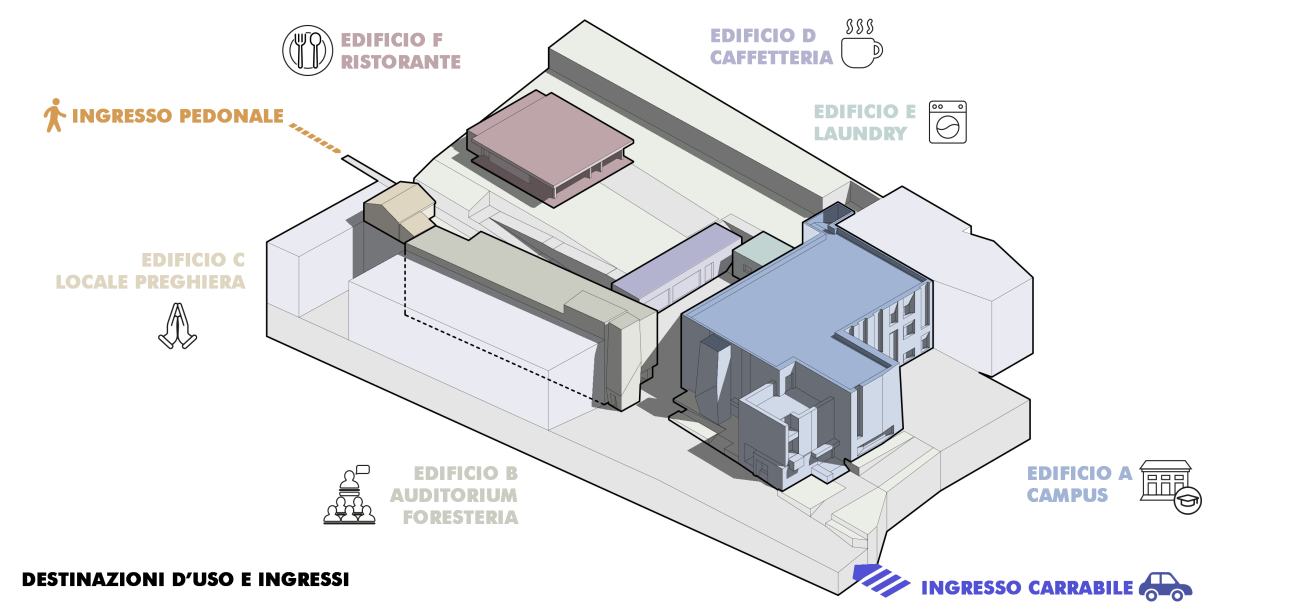
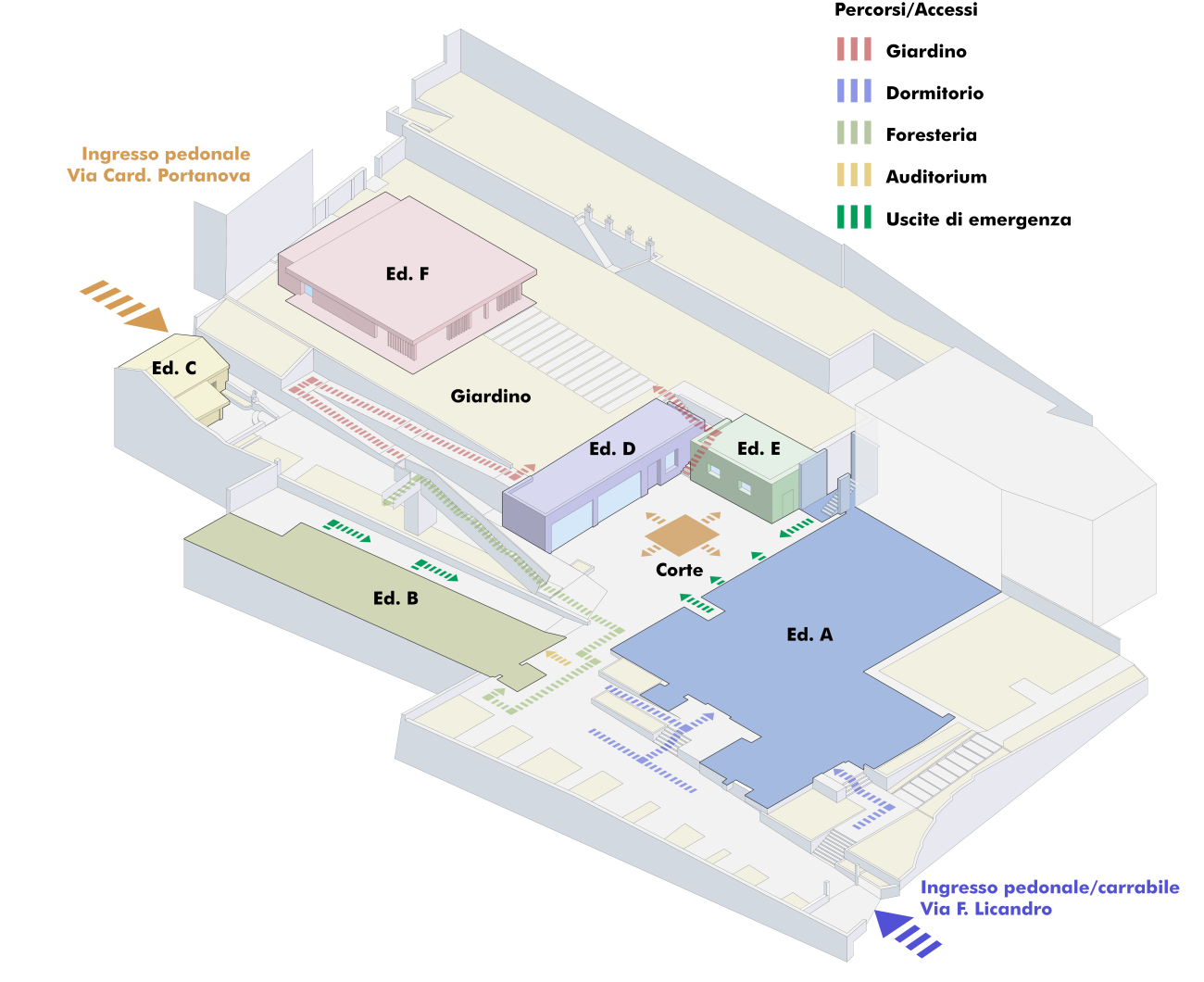
The internal layout of the spaces is organized to combine residential functions with teaching and service functions. The ground floor features the reception and reception areas, classrooms and laboratories for teaching activities, as well as common service areas. The upper floors house the residential units, designed as functional and comfortable accommodations, designed to support the quality of the students' educational journey.
Common areas—study rooms, meeting areas, and spaces for cultural and recreational activities—are designed to encourage social interaction, in the belief that adequate shared spaces positively impact student well-being and the building of a cohesive and inclusive university community.

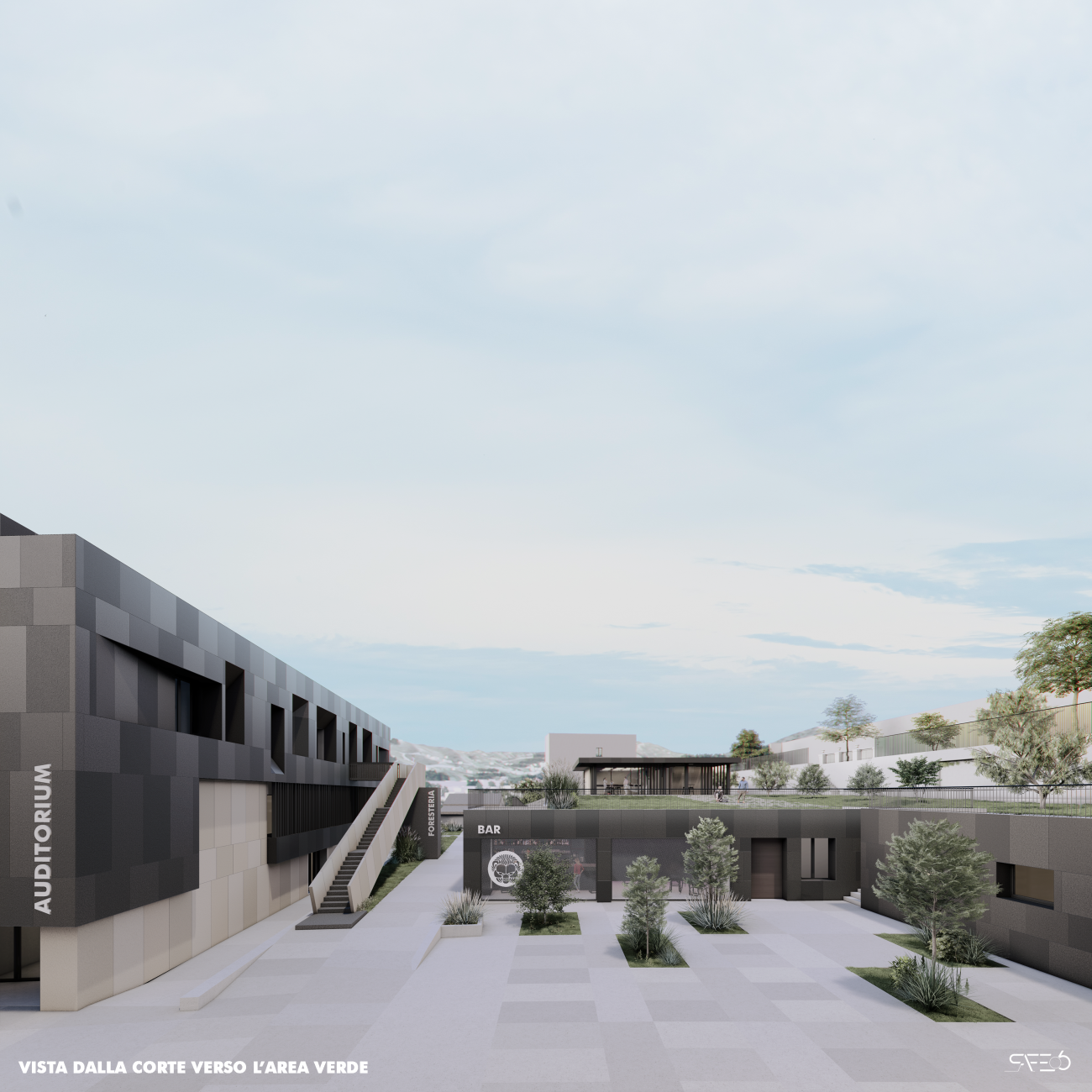
The defining element and fulcrum of the entire project is the approximately 1,400-square-meter park, which serves as both the heart of the campus and a new green infrastructure for the city.
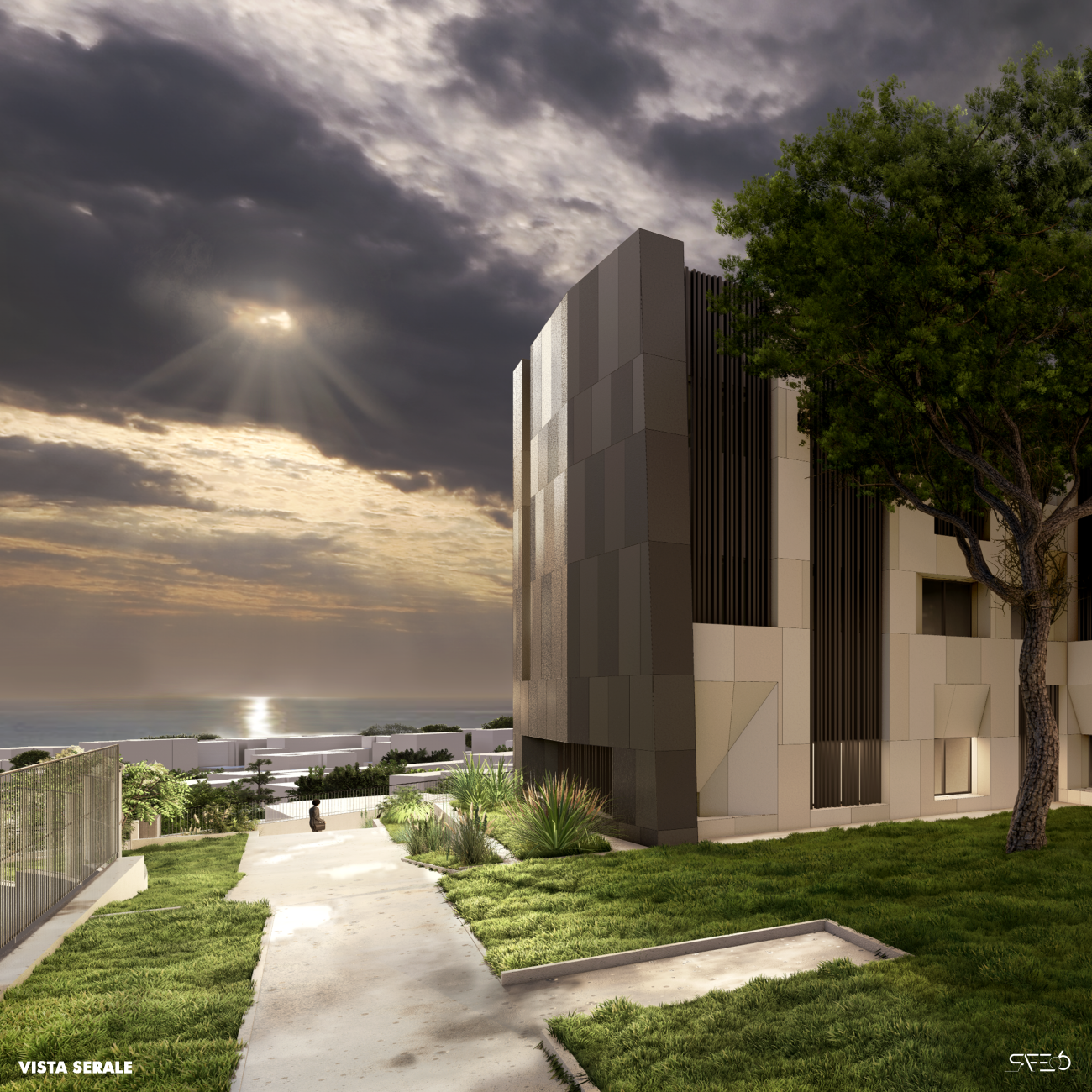
The design strategy stems from a careful study of the site and existing structures, focusing on the continuity and fluidity between internal and external spaces, and introducing new architectural elements while respecting the character and memory of the complex.
The garden is conceived as an open, inclusive, and permeable space, accessible not only to resident students but to the entire community. In this sense, it takes on the character of a truly urban public space, capable of responding to the city's strong demand for quality spaces. Its design takes into account the specific climatic and environmental characteristics of the Mediterranean context, with plant and material choices consistent with the site's identity and oriented toward sustainability and resilience.
The park will house a small open-air theater seating approximately 150, designed to host shows, conferences, screenings, and various cultural events, a bar, and a small restaurant, designed as meeting and social spaces for students and residents.
These spaces, scattered throughout the greenery and integrated into the overall garden design, will help make the campus a vibrant and vibrant place throughout the day, strengthening the sense of belonging and the collective identity of the place.

The project resolutely pursues the goal of overcoming the traditional model of the closed campus, closed in on itself and separated from the surrounding urban context.
The Università Mediterranea intends to build an open, permeable system capable of maintaining ongoing and fruitful relationships with the city and its inhabitants.
The campus is conceived as an interdisciplinary and multifunctional hub for exchange between students, faculty, researchers, and citizens, a space where university and urban life meet, overlap, and mutually enrich each other.
Spaces dedicated to physical and mental well-being, leisure areas, and spaces for collective and cultural activities contribute to a broad and diverse offering, capable of attracting diverse audiences and meeting multiple needs.
The transformation of the former convent of the Monfort Fathers therefore represents an investment that goes far beyond the building stock: it is an investment in the urban quality of Reggio Calabria, in the construction of new collective spaces, and in the city's ability to attract talent and offer stimulating environments for education and research.
As part of a long-term strategic vision, the Università Mediterranea confirms its role as a cultural, social, and territorial driving force in its context, through projects capable of generating innovation, sustainability, and new opportunities for public participation.